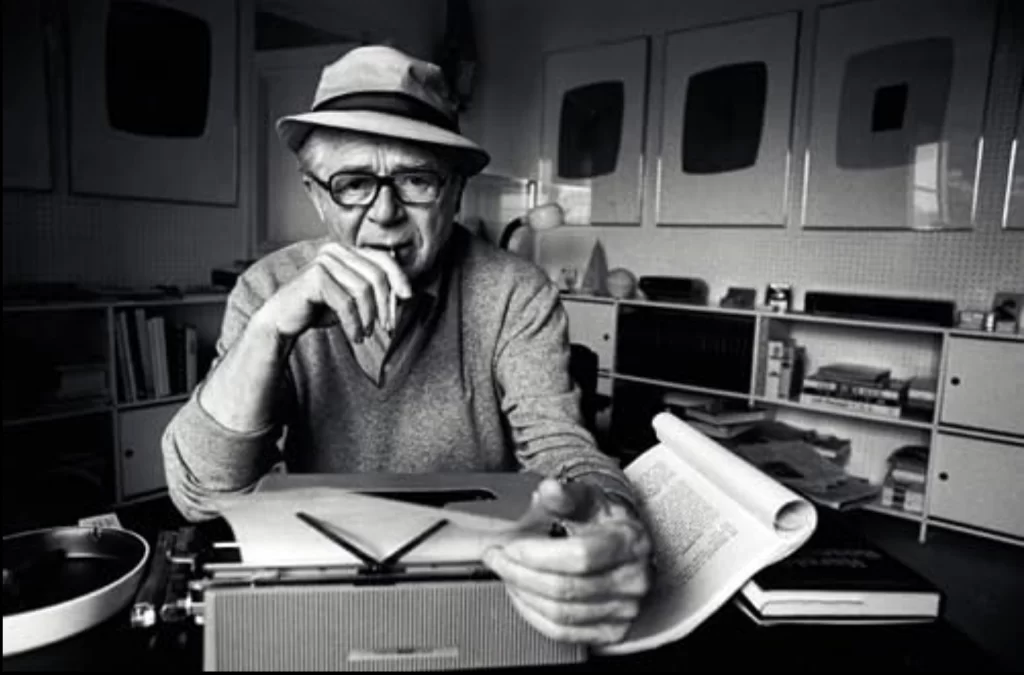
Billy Wilder’s headstone reads
BILLY WILDER
I’M A WRITER
BUT THEN
NOBODY’S PERFECT
This epitaph reminds us of two things: one, Wilder’s and I. A. L. Diamond’s immortal closing line from Some Like It Hot; and two, that Billy Wilder considered himself first and foremost a writer, not a director.
None of our Journeyman Directors thus far have routinely written their own scripts. With notable exceptions (Patrice Leconte and Peter Hyams on Capricorn One), they are or were mostly hired guns. Give them a good script and they efficiently and without ego transform them into solid movies.
That Wilder was an accomplished director is not in dispute. Like Robert Wise, Wilder has an impressive filmography of classics:
- Double Indemnity
- The Lost Weekend
- Sunset Boulevard
- Stalag 17
- Sabrina
- The Seven Year Itch
- The Spirit of St. Louis
- Witness for the Prosecution
- Some Like It Hot
- The Apartment
And many more besides. He’s considered a “journeyman” director because he never created a distinct visual style, preferring to subjugate his filmmaking to the story. He still created some of the most memorable images in film history.
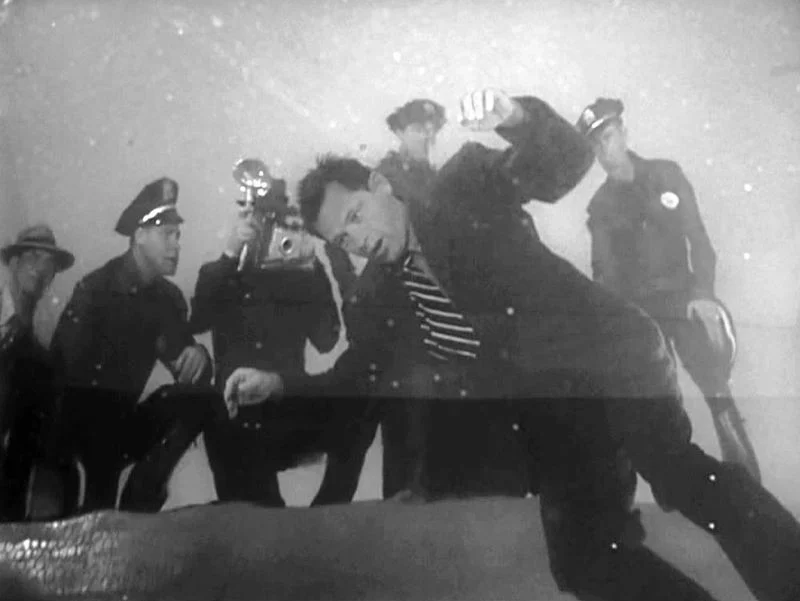

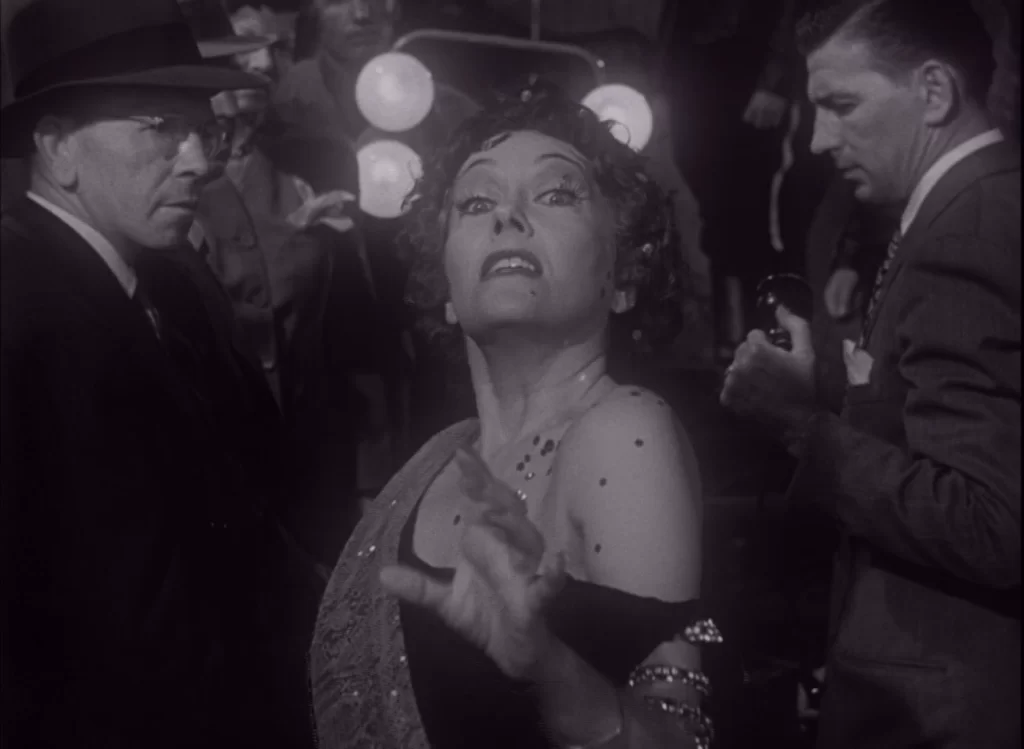
But that image of Norma Desmond is nothing without the dialog:
Alright, Mr. DeMille, I’m ready for my close-up.
Beautifully delivered in gravelly seriousness by Gloria Swanson and penned by Wilder, Charles Brackett, and D. M. Marshman, Jr., that wasn’t the only triumph of 1950’s Sunset Boulevard. The film opens with narration by William Holden, playing failed screenwriter Joe Gillis. That Gillis is floating face-down in a swimming pool is no impediment to the story, which he tells in flashback from the grave. On the run from creditors, Joe stumbles upon a run-down Sunset Boulevard mansion. Holed up inside is faded superstar Desmond and a bizarre group of hangers-on. These include actual silent film stars such as Buster Keaton and Erich von Stroheim as Norma’s butler and ex-husband Max. Max is keeping Norma in a deluded state of relevance, writing fake fan mail to her. Joe sees his chance to ride this delusion and gets himself hired to write Desmond’s comeback film to be directed by Cecil B. DeMille. Unfortunately, Desmond decides Gillis should be a kept man, and when Joe snaps and breaks the illusion, Norma snaps, too, with deadly consequences.
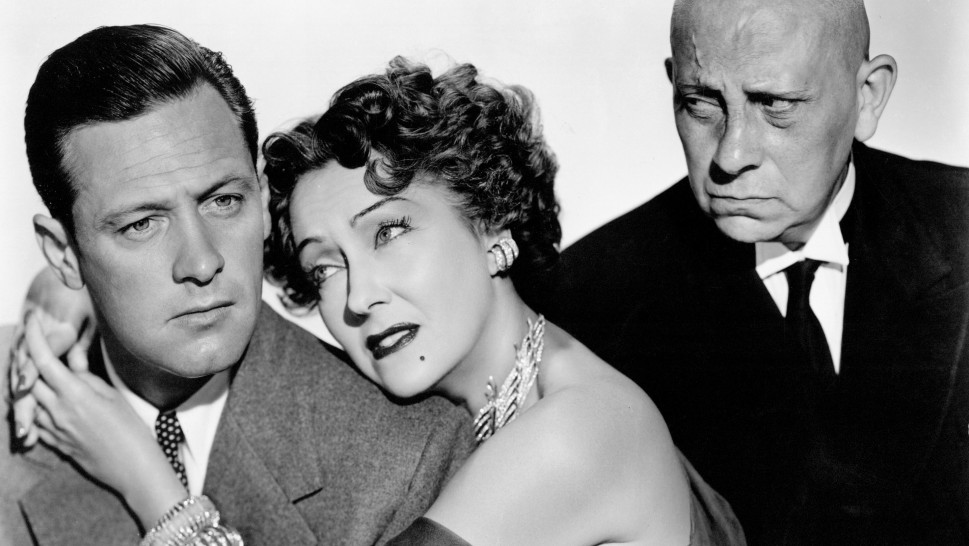
The casting of Stroheim is genius. Like Keaton and Swanson, Stroheim was a giant of the silent film era, having directed The Merry Widow and the seminal epic Greed. Cecil B. DeMille played himself, as did showbiz columnist Hedda Hopper. Sunset Boulevard is both a classic film noir and also a meta-film on the movie industry itself. Swanson gets to deliver not only the classic closing line but also the rejoinder to Joe’s observation that Desmond used to be big: “I am big, it’s the pictures that got small!”
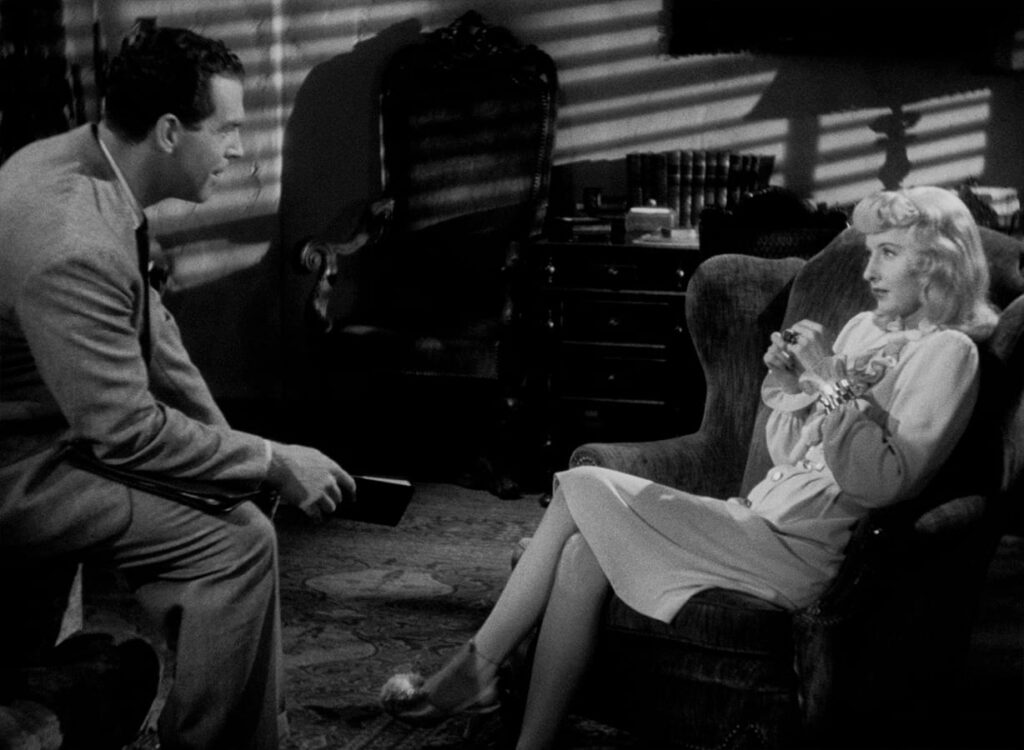
Double Indemnity is often considered the perfect film noir. As with Sunset Boulevard, the story is narrated in flashback by a gunshot-wounded man, this time an insurance salesman played by Fred MacMurray. He gets roped into a scheme to murder Barbara Stanwyck’s husband and share in the payout. Stanwyck plays a classic femme fatale—seductive, scheming, and with a possible dark history of murder. MacMurray realizes too late he’s in over his head, resulting in a lethal confrontation between the partners in crime.
Wilder’s screenplay, written with hardboiled author Raymond Chandler and based on James M. Cain’s novel, features extremely stylized dialog. If you only know MacMurray as the genial dad in My Three Sons, his fast-talking insurance salesman is a jarring switch.
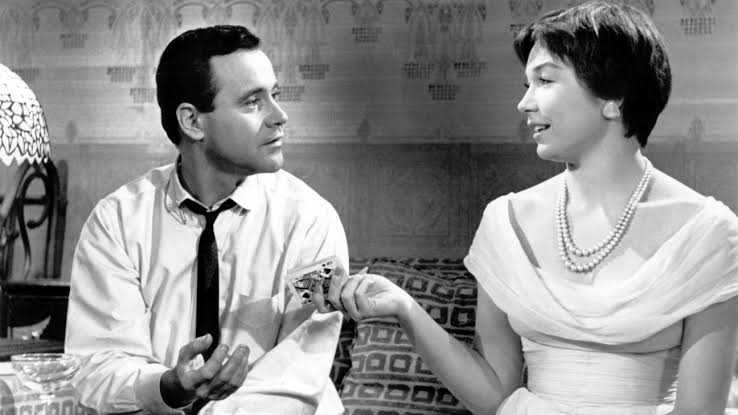
MacMurray also shows up in The Apartment as a philandering executive who uses Jack Lemmon’s apartment for his assignations. It turns out several executives have bulldozed Lemmon’s Baxter into using his apartment for the same. In return, they give Baxter positive performance reviews. Baxter finds the pretty elevator operator Fran (Shirley MacLaine) is MacMurray’s mistress when she stands him up for a date to be with MacMurray. This all culminates with MacMurray’s secretary telling Fran about his other affairs, Fran attempting suicide, MacMurray firing his secretary, and his secretary retaliating by revealing all to MacMurray’s wife. Amidst it all, Baxter learns to stand up for himself.
The Apartment won Wilder Oscars for direction and screenplay (co-written with frequent collaborator I. A. L. Diamond). It is a funny film, but it is a product of its time. It’s hard to tell how critical the film is of the social mores of 1960, or even if these are normal or exaggerated stereotypes. The attempted suicide by Fran is a serious turn in an otherwise light comedy and could be read as an indictment. Certainly MacMurray’s executive is the villain, and we can be glad such hostile work environments are disfavored today. The brilliant and energetic screenplay closes with another timeless line, when a newly energized Fran tells the newly empowered Baxter to “shut up and deal.” The two stars would appear again together in Wilder’s Irma la Douce.
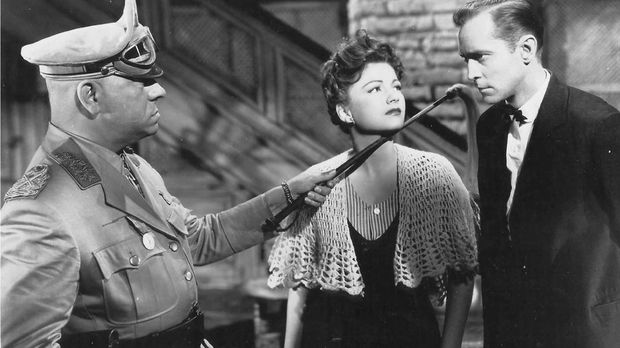
Wilder is maybe best known for his two films noirs and a spate of comedy classics, plus a serious drama about alcoholism (The Lost Weekend), but the last movie I want to mention is a little-appreciated film called Five Graves to Cairo. It’s kind of a spy film set in North Africa during World War II. Franchot Tone plays a British tanker mistaken for a German operative by Field Marshal Rommel (another great performance by Erich von Stroheim). Tone plays along to learn the location of five supply depots, the “Five Graves” of the title. Most of the action takes place in a mostly-abandoned hotel, echoing Casablanca and placing it in a category with Wilder’s courtroom drama Witness for the Prosecution. These three movies demonstrated how much cross-fertilization there was between Hollywood and the theatre. Casablanca and Witness for the Prosecution were both adapted from plays (the latter by Agatha Christie). Five Graves to Cairo was adapted from a novel, but the action capitalizes on the claustrophobic confines of the locale, with Tone always one misstep away from discovery and death.
My wife and I love old movies, spy films, war films, and the missus will watch just about anything set in Egypt. So when we learned about Five Graves to Cairo in 2000, we immediately looked for it. No video store had it, so I had to order a VHS copy. The fact that Wilder directed and co-wrote it was a guarantee we would enjoy it. As far as I can see, he hasn’t made a bad movie. I learned just now Quentin Tarantino placed Five Graves on his list of Top 11 Films of All Time. “Favorite films” is a subjective standard—QT’s list includes Brian DePalma’s Blow Out but not Antonioni’s original Blow Up. With six Oscars—two for directing, three for writing, and one for producing—Billy Wilder can claim to be an objectively beloved filmmaker.
