
Agneiszka Holland is a director I greatly admire. I have not seen all of her films, but I’ve enjoyed (or at least appreciated—you’ll see what I mean shortly) every one I have seen. But like Patrice Leconte, Holland barely qualifies as a journeyman. You could argue the theme of religion and faith runs strongly through her films The Third Miracle and Julie Walking Home. The Holocaust, which claimed members of her family, forms the backdrop of Europa Europa and In Darkness. And the horrors of Communism are on full display in To Kill a Priest, Mr. Jones, and the miniseries The Burning Bush. The critical success of Europa Europa brought her to the attention of Hollywood, and she directed several successful American productions, including The Secret Garden, Washington Square, and the 2014 remake of Rosemary’s Baby. Holland seems to bounce effortlessly between English and Polish, between Hollywood and Warsaw. I suppose if taking a paycheck from Warner Brothers disqualifies you from auteurship, Christopher Nolan should give back his numerous awards for directing the three Dark Knight movies.
“Artistic integrity” (meaning turning down corporate funding to make your art) is a dumb idea that exists only in movies like La La Land. Of course Nolan was going to envision Batman, opening the door as it did for The Prestige, Inception, and Interstellar. Likewise, it is because Holland directed The Secret Garden that she got to make a steady parade of excellent, daring, and often wrenching films about people staring evil in the face. It helped that Francis Ford Coppola’s American Zoetrope was behind The Secret Garden, shielding Holland from too much studio nonsense. While the film version captured the gothic dread of the beloved Frances Hodgson Burnett novel, it also bursts with color, magical realism, and hope. Roger Deakins photographed The Secret Garden, painting the color story primarily in blues and greens. These hues are cold at the film’s beginning, where the production design, costumes, and interior of Misselthwaite Manor is cloaked in foreboding and sickly greens. But then the color takes on new meaning upon discovery of the titular garden, yielding to a sunny, chlorophyllic brightness. The air fills with motes, the seeds of life. A crippled boy is healed, and a family is made whole again—all through the courageous faith of a young girl.

The Secret Garden is prodigal in its beauty. The color story is bold and unashamed while also being very much a part of the narrative. So many movies today are monochromatic and lifeless, which directors seem to mistake for seriousness. Go ahead. Accuse Agneiszka Holland of unseriousness. You won’t get very far with that thesis. Mr. Jones is a testament to that. It’s a film about the Holodomor, Stalin’s engineered starvation of Ukraine. It’s serious stuff.
Mr. Jones is an English language movie because it’s about an Englishman (A Welshman, actually) who discovered what Stalin was doing, tried to tell the world, and got a bullet for his trouble. It tells the story of real people and real events and manages to point the accusing finger at everyone. Released in 2019, the connection to Russia’s 2014 invasion of Crimea could not be ignored. The New York Times’ Walter Duranty, played here by Peter Saarsgard, knew about the starvation but chose to lie about it in his coverage. In the film, Gareth Jones (James Norton) is introduced to the Pulitzer-winning journalist while the latter is naked, being plied as he is with vodka and women supplied by an obliging Stalin. Holland’s film shows Duranty as a “useful idiot” who tells lefties in the West what they want to hear—that Stalin’s reforms are working, if slowly, and the vaunted starvation is an exaggeration. He surely knows the Soviet leader is diverting grain to purposely starve and subjugate the Ukrainians. Vanessa Kirby plays another British reporter who points Jones in the direction of the horrible truth. He visits a restricted area, where villagers have resorted to cannibalism. Captured by the Soviet police and imprisoned, he is repatriated to the UK and ordered to repeat the party line. None other than George Orwell convinces Jones to tell the truth. He does, is promptly smeared by Duranty and the New York Times, and only succeeds by feeding the news directly to William Randolph Hearst. He gets his bullet years later from a suspected Soviet hit squad. Duranty got to keep his Pulitzer.

The film is beautiful and stark, descending from the civilized offices of the UK Prime Minister to the nightclubs of Moscow to finally the emptied villages of Ukraine. Along the way, dialog becomes sparser and the visuals become more pointed. It’s as if Holland remade Doctor Zhivago, except with the winter palace as a cold, deathly tomb. Mr. Jones was lauded for its filmmaking but criticized for its small lapses in accuracy. None of these lapses compromised the broad truth of the story—that Communist sympathizers like Duranty and the New York Times were so desperate to portray the Soviet Union in a positive light, they whitewashed one of the greatest genocides of the 20th century.
Of course, no genocide is as feared and hated (and denied) as the Nazi Holocaust. Before Life is Beautiful and Jojo Rabbit, Agneiszka Holland made a (sort of) comedy about that horror, following a Jewish teenager who somehow becomes a Hitler Youth and then a German war hero. Europa Europa is even more astonishing because it’s based on a real person’s adventures.

Solomon Perel had his bar mitzvah on Kristallnacht, the first of many conspicuous coincidences. His parents send him out of Germany to escape persecution, and he ends up in a Soviet orphanage. Just as he’s about to be persecuted for his bourgeois upbringing, the Germans invade, and Perel, who’s fluent in German and Russian, tells them he’s an orphaned German boy named Josef Peters. The German unit adopts him as a sort of mascot and he’s eventually sent to a school for Hitler Youth. At every turn, “Josef Peters” encounters amazing (one could say divine) serendipity that helps him keep his Jewishness a secret. He’s also constantly finding ways to avoid physical exams and locker rooms. He’s circumcised, you see, and that one detail would be his death. A tense scene has him selected by his teacher for a test of racial purity. The teacher measures his skull, finally declaring “Josef Peters” to be a perfect specimen of the German Aryan. Two key Germans discover his secret—a closeted gay soldier and the mother of a girl Solomon falls for. She reveals her own secret: she hates the Nazis, and Solomon is finally able to release his emotions into her sympathetic bosom.
Europa Europa received widespread acclaim for Holland’s script, direction, and star Marco Hofschneider’s deep performance as Perel. An interesting connection: Hofschneider would go on to play Ludwig van Beethoven’s son in Immortal Beloved while Holland would direct the film Copying Beethoven, covering a made-up romance with a female copyist. In that movie, Ed Harris played the aging composer. He also starred in another of Holland’s films, The Third Miracle.
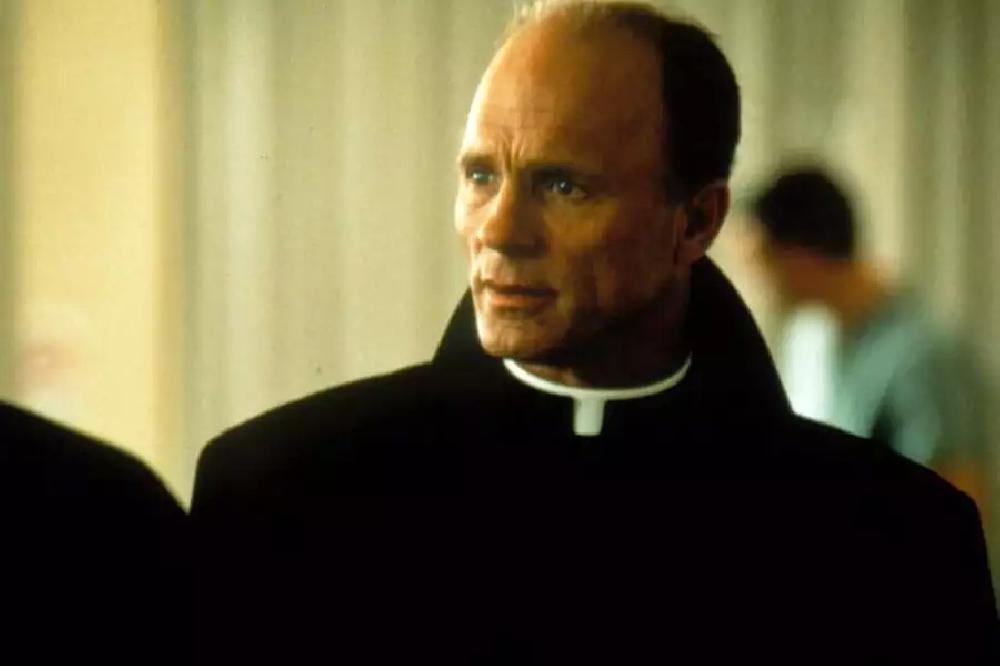
The Third Miracle did not receive a lot of attention, but it’s a movie that looms large in my memory. I considered including it in my Christ and the Christian series, but it belongs here, bringing together two of Holland’s most persistent themes: faith and holocaust. In this movie, Ed Harris plays Father Frank, a priest whose job it is to investigate miracles. If he verifies them, the miracle worker can proceed to canonization. If not—well, let’s just say Father Frank is known as “the miracle killer” because he’s never given thumbs up to one. Father Frank wants to believe, though. Early in the film, he discovers a miraculous event does have a supernatural origin—a demonic one. Strike another potential saint. The deflated priest is asked to investigate a second miracle to canonize a woman named Helen O’Regan. Helen is long dead, but her daughter Roxanne (Anne Heche) is a bitter unbeliever, and with good reason—the saintly Helen abandoned her as a girl. Roxanne wants nothing to do with her mother or family in general, and her only interest in the intense Frank is as a potential lover. Revelations are made in favor of miracle #2, the one needed for canonization, and that’s when we realize the story is only tangentially about a saint. The title, after all, is The Third Miracle. This is a movie about the inner faith lives of a broken priest and a broken daughter. I mentioned it intersects with the Holocaust—Armin Mueller Stahl plays a former Nazi soldier who plays a pivotal role in the investigation.
The Third Miracle takes doubt and truth seriously, and I’ve recommended it to other Christians, especially Catholics. Like The Secret Garden and Europa Europa, it’s also full of hope. Even Mr. Jones I would categorize as a film with a hopeful slant. No movie about the truth can be hopeless. I look forward to seeing more of Agneiszka Holland’s oeuvre, and I will cite her again soon when I cover Trois Coleurs: Bleu, which she wrote with fellow Pole Krzysztof Kieślowski.
