One of the reasons serious cinema lovers dismiss “journeyman” filmmakers is they often make fun, widely-seen crowd-pleasers. Rob Reiner, Robert Wise, and Penny Marshall made hits that will never be confused with Cries and Whispers or The Human Condition. To be sure, a popular movie can be a work of art. But summer tentpoles are often ignored in the wider discussion of “great films.”
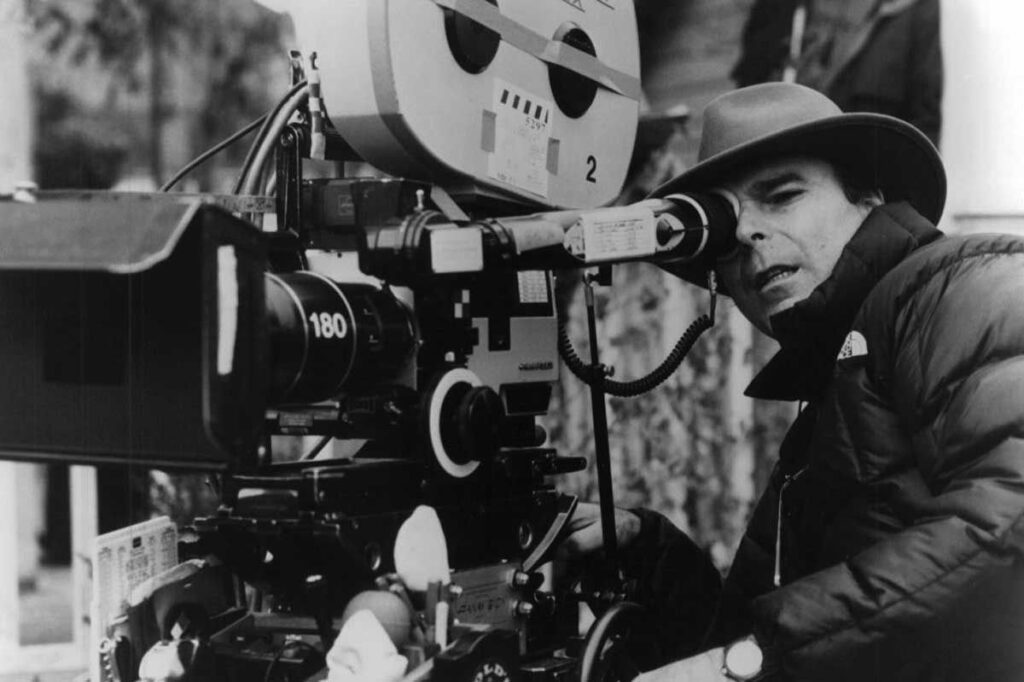
Peter Hyams is a writer, director, and cinematographer who has worked with Sean Connery, Gene Hackman, and Arnold Schwarzenegger. His works run the gamut from sci-fi landmarks to gritty crime dramas to a wushu film set in 17th century France. Also a bunch of Jean-Claude Van Damme films.
Although his career as a writer precedes his best-known work (he wrote the scripts for Charles Bronson’s spy thriller Telefon and Steve McQueen’s The Hunter), Peter Hyams will always be the mind behind Capricorn One. Paranoid conspiracy thrillers never went away, but they were in full bloom in the 1970s. (Thanks, Nixon!) In addition to Capricorn One (see my write-up on that film here), Hyams also made two highly-lauded sci-fi outings: Outland and 2010: The Year We Made Contact.

Outland stars Sean Connery as an old marshal assigned to a backwater mine on Io. It’s a sci-fi reimagining of High Noon, so the parallels to the aging Gary Cooper are apt. While the story is strong and the action is tight, what makes this film memorable is the production design. Foot chases, shot in handheld shaky-cam, frenetically wind through maze-like bunkrooms. The movie doesn’t dwell on the hellish conditions of the miners but gives us glimpses instead. Batwing saloon doors separate rooms, recalling Outland’s old west origins. And notably, Connery and his opponents use shotguns more at home in 19th century Yuma than 21st century Jupiter. These firearms cause a lot of damage—one of the film’s biggest modern criticisms is it popularized “explosive decompression,” the myth that the human body bursts apart in the vacuum of space. To be sure, the outnumbered Connery tricks one assassin into blasting out a protective window, causing him to fly into space and explode. It may be bad science, but it looked cool.

2010: The Year We Make Contact may have been a watershed project for Hyams. He inherited the cinematic world of Stanley Kubrick, who reportedly told him to not try to remake 2001 but make his own movie. That he did. 2010 is a crowd-pleaser full of answers and straight lines as opposed to Kubrick’s inscrutable questions. The special effects are amazing—the shot of the Discovery rotating end over end above Jupiter elicited gasps of wonder in 1984. And there’s a lot of Hyams’ signature theatrical dialog. We also get a young Helen Mirren as the Russian commander and more questionable science—the gravitational and thermal effects of a second sun are glossed over completely! But that’s not the point. 2010 was meant to entertain, and it is, as my kids have pointed out, waaaay more engrossing than 2001: A Space Odyssey.
2010 was also the first movie Peter Hyams shot himself.* Almost no Hollywood directors act as their own director of photography (Steven Soderbergh, Zack Snyder, and Robert Rodriguez are the only ones who come to mind) because it’s hard. And Hyams chose to debut his DP chops on the effects-heavy 2010. Hyams’ cinematographic style has been criticized as being overly dark. Why is that a criticism? In Narrow Margin, Gene Hackman and Anne Archer hide out in a darkened train car to escape detection from their pursuers. As they pass trackside lights, their compartment alternates between dim illumination and complete black. It’s an effective noir device, and it’s also a memorable scene in a diverting film. Besides Narrow Margin, Hyams directed two other cop films: the excellent and energetic Running Scared, with Billy Crystal and Gregory Hines as partners with loads of chemistry, and The Presidio, not quite as good but showcasing Meg Ryan and the two then-most recent “Sexiest Man Alive” awardees: Mark Harmon and Sean Connery.
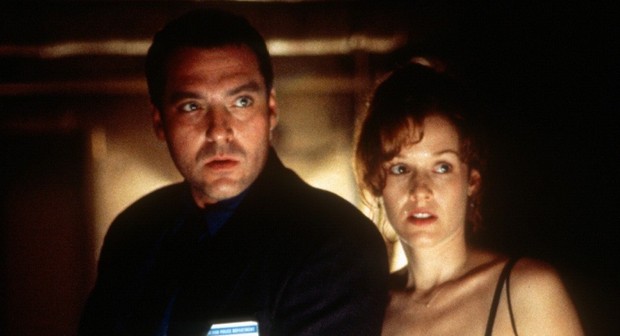
For crowd-pleasers, there seems to be no genre as reliable as horror. Peter Hyams directed two horror films that are rarely classified as such: The Relic, a monster film that found new life when Quentin Tarantino praised it, and End of Days, a movie that features—no joke—Arnold Schwarzenegger as a cop trying to prevent Satan from impregnating Robin Tunney at midnight on January 1, 2000. I guess that was the extent of cinematic anxiety over Y2K, and it did prompt the Arnold character to ask, “Is that Eastern time?”
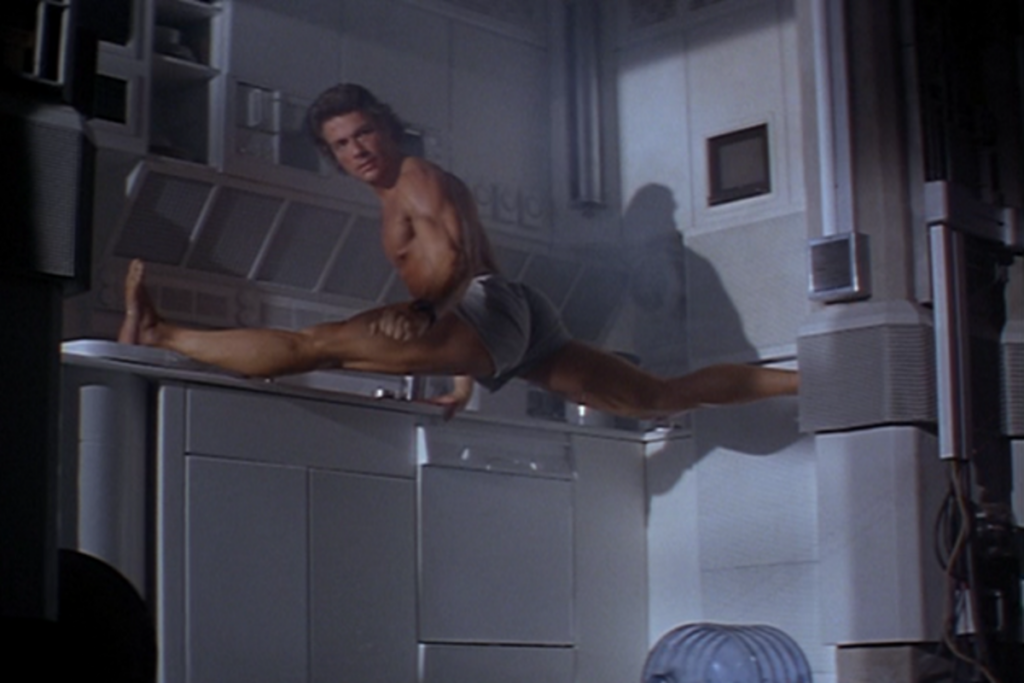
Finally, we come to Peter Hyams’ martial arts phase. After decades of directing, he scored a massive hit with Timecop. Along with John Woo’s Hard Target, Timecop is often considered JCVD’s best work (we’re grading on a curve here) and features more garbage science, such as the idea that “the same matter can’t occupy the same space.” It also offers us the most implausible time machine—one where you take a rocket sled in but emerge in the past sledless. But Timecop was a crowd-pleaser. Everything, however unbelievable, looked cool, and prime JCVD looked badass doing his splits and kicks. Hyams and Van Damme would reunite for two more films. I only saw Sudden Death, a movie that is literally Die Hard in a hockey arena. Sudden Death was enjoyable enough, and it ends with an impressive special effect of a helicopter crashing onto the ice inside the Pittsburgh Civic Arena. But I gotta ask: if Powers Boothe’s bad guy was so intent on blowing up the arena, why would he wait just because the game went into sudden death overtime? Maybe he has some sort of undiagnosed and very esoteric OCD.
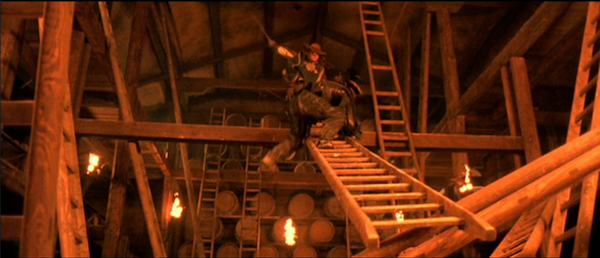
Finally, there is The Musketeer. Whoever conceived this picture is either a genius or a psycho or a movie producer. It’s Dumas meets Once Upon a Time in China, which it literally is since Jet Li’s fight choreographer designed the combat scenes. You get Justin Chambers dueling Tim Roth on seesawing ladders rather than wires. Musketeers fence while balanced on rolling wine barrels. And someone managed to convince Catherine Deneuve to be in this thing. The Musketeer was a flop and hardly remembered today, but I had to smile at the vaudeville sensibilities of it all.
Peter Hyams is a fellow Syracuse grad and because of Capricorn One one of my filmmaking heroes. I heard he invited fellow SU alum to share a monthly table at Trader Vic’s in Beverly Hills. Unfortunately, I only heard this as I was packing up to move out of L.A.—these being the years before Facebook. Not only would I have enjoyed the connections, I really would have liked the chance to tell him how much his movies inspired me—bad science and all. Mr. Hyams, if you’re reading this, thank you.
*Apparently, Peter Hyams lit and shot all his movies from Outland onward. He couldn’t get credit due to union rules until he did 2010. Source: https://www.money-into-light.com/2016/08/an-interview-with-peter-hyams-part-2-of.html
