What makes one a “journeyman” director? When you think about it, many filmmakers from Hal Ashby to Ridley Scott to F. Gary Gray to Danny Boyle could be considered journeymen. But Hal Ashby has a distinct style, Ridley Scott has several high-profile franchises* (Alien, Blade Runner, Gladiator), and F. Gary Gray makes slick Friday night entertainments that glance off (or fully portray) the African-American experience. Danny Boyle’s a little more problematic. He’s done comedy (Trainspotting, Millions), drama (Slumdog Millionaire, 127 Hours), and of course the 28 Days series. I think one of the things that disqualifies Boyle as a journeyman is he tends to originate his own projects. With the exception of the never-made Danny Boyle James Bond movie (almost every Bond director is a journeyman, Sam Mendes excepted), Boyle is his own writer, even when he doesn’t get screenplay credit. You don’t give one of his projects to someone else the way you do a Brett Ratner or Shawn Levy movie.
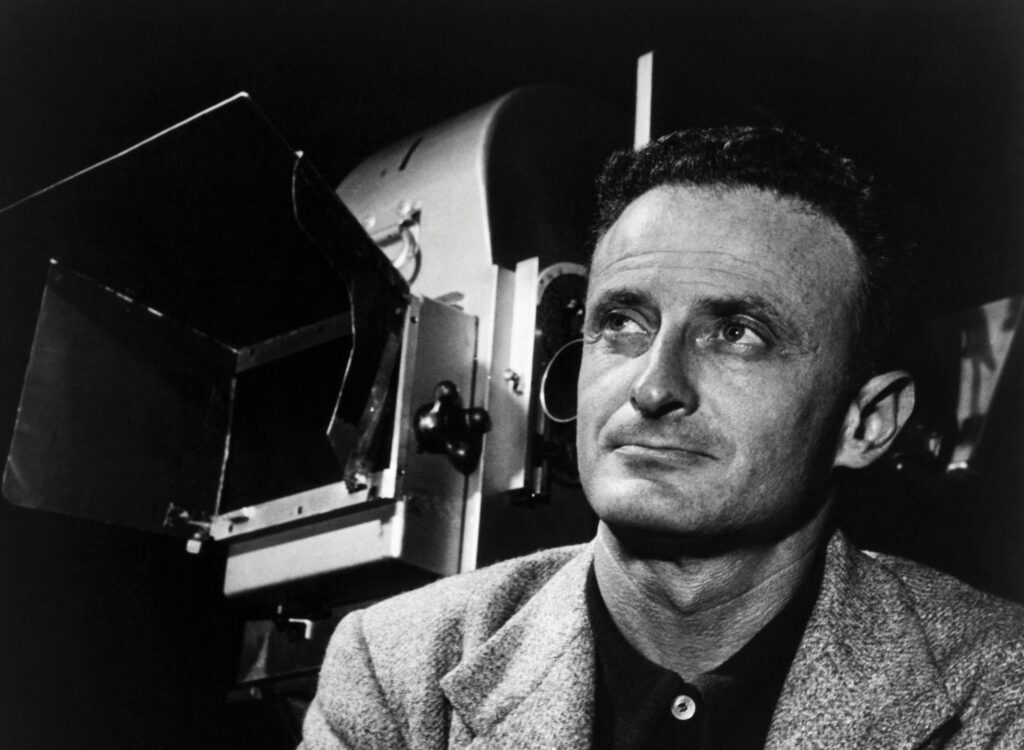
That brings us to the final four directors in my series. I struggled to narrow down the list. One of the directors barely qualifies. Another is considered an auteur in his own right. But Fred Zinneman sits squarely in the tradition of Robert Wise, Billy Wilder, and Henry Hathaway. He came from the studio days, worked quickly and efficiently, yet still managed to put his mark on cinema history. Directors like Zinneman contradict the idea that to be an artist, one needs to be difficult, slow, and ignorant of budgets.
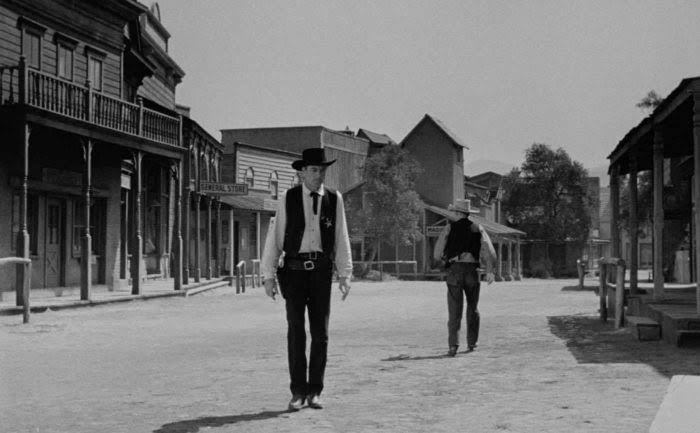
One of Zinneman’s earliest hits is also one of his best known: High Noon. This is literally the template for the ticking clock story. In it, Marshal Will Kane is retiring to enjoy married life with his Quaker wife Amy. Word comes that the dastardly Frank Miller has been released from prison and will arrive in Hadleyville on the 12:00 train, after the Kanes leave but before the new marshal arrives. Kane knows he needs to stay to confront the Miller gang, but his pacifist wife begs him to avoid confrontation. The townspeople are mostly cowards, and soon the marshal realizes he’s all alone.
The story is a classic Western morality tale about standing up to evil in the face of certain doom. That the conflict parallels the House Un-American Committee’s pursuit of Hollywood Communists was not lost on John Wayne, the first and obvious choice to play Kane. Wayne refused, recognizing the meta-narrative for what it was. But High Noon is so much more than a resistance cry against McCarthy. It’s about refusing to run from duty and what’s right. This turned out to be a comeback of sorts for Gary Cooper, who won the Best Actor Oscar (which John Wayne accepted on his behalf—he obviously bore no grudge). High Noon also introduced the world to the sneering Lee Van Cleef, playing one of Miller’s thugs, and the angelic Grace Kelly in her first movie role. She played Amy Kane as a convicted pacifist. But when the guns were aimed at her new husband, even she jumped in with lethal force. Actual ticking clocks pervade the soundtrack, growing more prominent as the town empties out, leaving the marshal more and more alone. An initial test screening didn’t please the audience, so producer Stanley Kramer, director Zinneman, and editor Elmo Williams shaved the running time down to sync with the clocks, making this 1952 classic an early “real time” film.
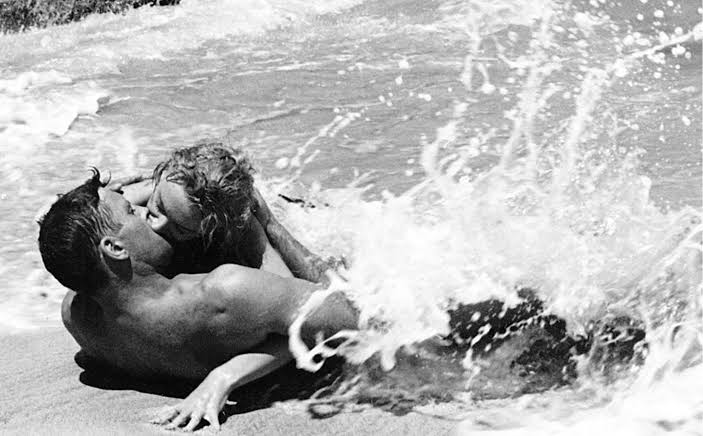
The next year brought another massive hit for Zinneman. From Here to Eternity was a controversial novel, filled as it was with profanity and sexual dissipation. The movie version had to dispense with the language and change Donna Reed’s prostitute into a “hostess” at a dry club. I tried to find out if these chaste(-ish) soft drink joints existed but I could find nothing—I presume they’re an invention of screenwriter Daniel Taradash. There’s still plenty of adultery—Deborah Kerr’s Karen has a hot affair with Burt Lancaster’s Segreant Warden, culminating in the seminal romp in the Waikiki waves. I loved Kerr in this film, a 180 degree turn from her usual roles. The main story involves Montgomery Clift’s Robert E. Lee Prewitt, who refuses to box after seriously injuring another man in a fight. Prewitt’s friend Maggio (Frank Sinatra) is beaten in the stockade by the racist Judson (Ernest Borgnine) causing the pacifist Prewitt to knife Judson to death. Then the Japanese attack Pearl Harbor and everyone spirals into an existential crisis.
The Japanese attack was indeed a spectacle, but it felt like an intrusion on all these unlikeable characters. They’re all clearly troubled already. The outbreak of war only seemed to serve to push some of them over the edge. This is a pure melodrama, and I didn’t truly enjoy From Here to Eternity, even as I appreciated the top-notch acting and filmcraft. Edgy and provocative in 1953, the movie just felt to me like a chronicle of bad behavior and inscrutable motives in 2026.
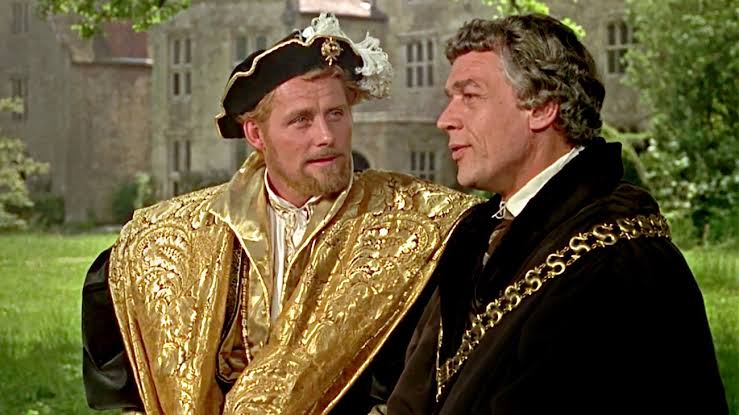
A film I did really enjoy was A Man For All Seasons. Paul Scofield is stellar as Sir Thomas More, who refuses to support Henry VIII’s bid to annul his marriage to Catherine of Aragon. Courtly, ecclesiastical, and personal machinations pile on until More is pressed to capitulate or die. He chooses death. As in High Noon, A Man For All Seasons is about the courage to stand on principle even in the face of death. More was a sinner (as are we all) and as a Catholic priest he tortured and persecuted Protestants. But his stand against his King is what he is best remembered for, lending his name to legal institutions and colleges beyond counting. My 14-year-old son watched this movie with me, lured by Robert Shaw’s (“the guy from Jaws”) presence as Henry VIII. He declared at the time it was one of his favorite films. Even he could see the heroism and steadfastness depicted so ably in the film. As he did with From Here to Eternity, Zinneman won one of his four Oscars directing this landmark movie from Robert Bolt’s play (Bolt also won an Oscar for best adapted screenplay). Scofield deservedly won for best actor, and the film won Best Picture.
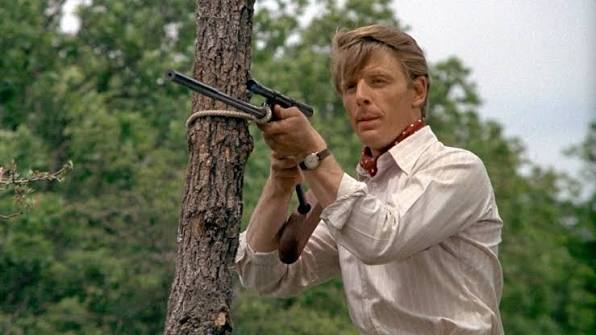
In too many of my Journeyman posts, I often ended with one of the director’s failed films. Happily, I can report Zinneman finished a decades-long career with 1977’s Julia, his second-to-last feature and his last Oscar nomination. But two years prior, he directed Day of the Jackal, an amazingly effective thriller with no major stars. By now, everyone knows the story. The Jackal is a ruthless assassin out for one last kill: French President Charles deGaulle. Most of the film follows The Jackal as he tests his custom rifle, prepares his disguise, and deals with forgers to get the proper papers. He scopes out his sniper’s nest and evades the authorities. He kills when he needs to, but unlike in the numerous remakes, he stays his hand most of the time. In 1975, there was not as much need for a thrill moment every 15 minutes. The tension from cross-cutting and missed opportunities did it all. Edward Fox is perfectly frigid as the amoral assassin. Michael Lonsdale, playing the French policeman hunting The Jackal, doesn’t show up until deep into the story, and his presence almost feels like an afterthought until he confronts the assassin in the final Paris showdown. As with High Noon, Day of the Jackal is a master class in pacing and mounting tension.
I didn’t see the TV series with Eddie Redmayne. I did see The Jackal with Bruce Willis as The Jackal and Richard Gere, Diane Venora, and Sidney Poitier hot on his tail. That remake was filmed in my then-hometown of Richmond, Virginia, and the production was everywhere, dressing up historic streets to look like Georgetown. Several of my friends had small roles (Secret Service Agent #6, Screaming Woman #4), so I did enjoy the movie watching for personal Easter eggs. Alas, it was a pale remake, relying on an automated cannon instead of a precision takedown rifle and littering the screen with carnage and shrapnel instead of slowly-building dread.
Edward Fox’s Jackal would be appalled. So would Fred Zinneman.
*I hate this word. They’re movies, not fast food joints.
