There’s a movie out there called Saved! that I never saw, despite a friend gifting me the DVD. The gift was a very unsubtle way of telling me my Christian faith was so much hooey, which is why I never watched the movie. The description of the plot promised me evangelical handwringing over homosexuality, premarital sex, teenage pregnancy (sadly no lecturing on abortion rights), mean girl bullying (but Christian), and the hypocrisy of a philandering pastor. In other words, if you wanted to craft a clunky screed to ham-handedly convince your Christian friends to leave the faith, this is the film you would make. You would convince zero people.
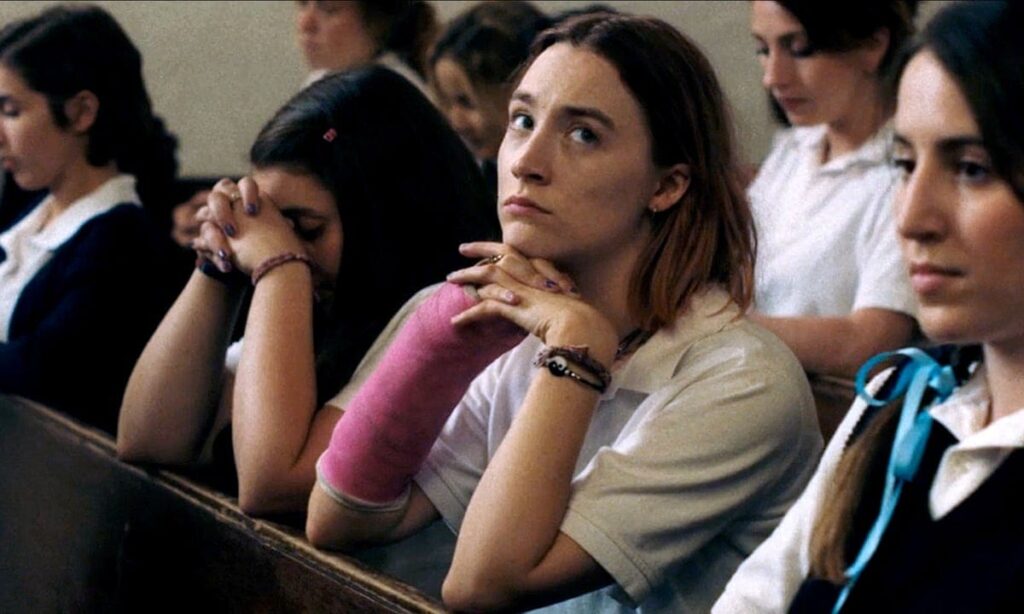
There’s another movie out there called Lady Bird that takes place at a Catholic high school. It also features homosexuality, premarital sex, and controlling parents. It’s full of f-bombs, drugs and drinking, and the main character disrupting an anti-abortion assembly with her insolence. It will never be shown on the Angel Studios streaming app. It’s also a beautiful movie about the hidden life of a Christian.
For you have died, and your life is hidden with Christ in God. — Colossians 3:3
Is Christine “Lady Bird” McPherson a Christian? The only reason she’s at Immaculate Heart is because, as her mother Marion says several times, her older brother saw someone knifed at the public school. We never see Marion or Lady Bird’s father Larry pray. No crucifixes or other Christian iconography adorn their home. They let their son Miguel’s girlfriend live with them. Larry (a wonderful Tracy Letts) is depressed when he loses his job. Marion is not affectionate. She complains bitterly over their low station and uses guilt to control and manipulate her daughter. She refuses to even say she likes Christine. An argument at the film’s start results in the rebellious teenager jumping out of a moving car. She breaks her arm and adorns her cast with the first f-bomb, this one directed at her mother. This family is worlds away from the always pleasant Tuohys of The Blind Side.
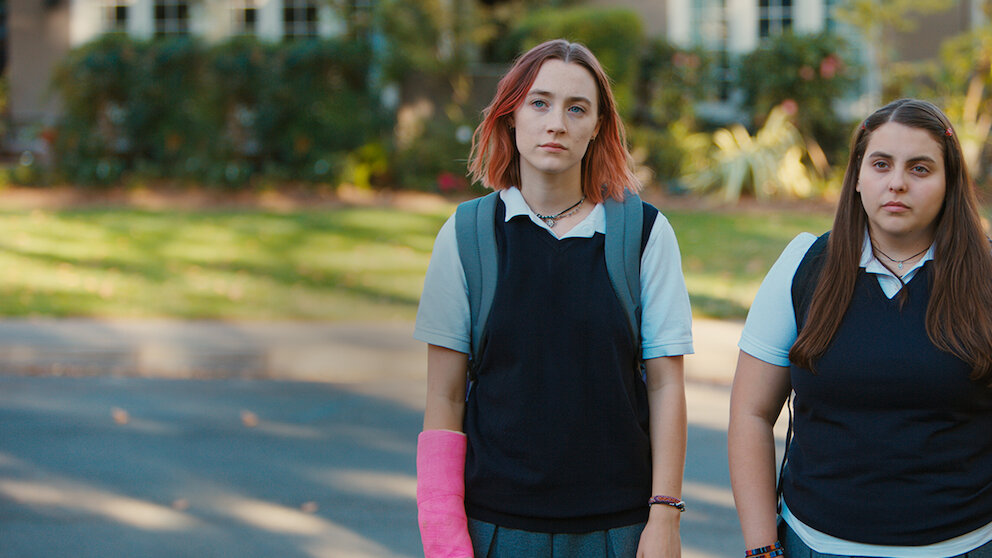
Lady Bird does not embody the aspirations of the “typical” American Christian teenager, at least the cheerful, faithful homeschooled type. As mentioned above, her family isn’t even Christian, at least in practice. She and her friend Julie (Beanie Feldstein) break into the (unconsecrated) communion wafers for a snack. She discovers her first boyfriend Danny (Lucas Hedges) kissing another boy. She vandalizes a nun’s car! But there’s a lot of truth in this character. She’s restless and unsatisfied with—well, everything. Her friends, including the poor Julie and the wealthy Jenna, are content with their futures in Sacramento. “I wish I could live through something,” Lady Bird gripes, even as she watches the world engulfed by the Iraq War. This is why she insists on applying to colleges in New York, far from the boring Sacramento that is home.
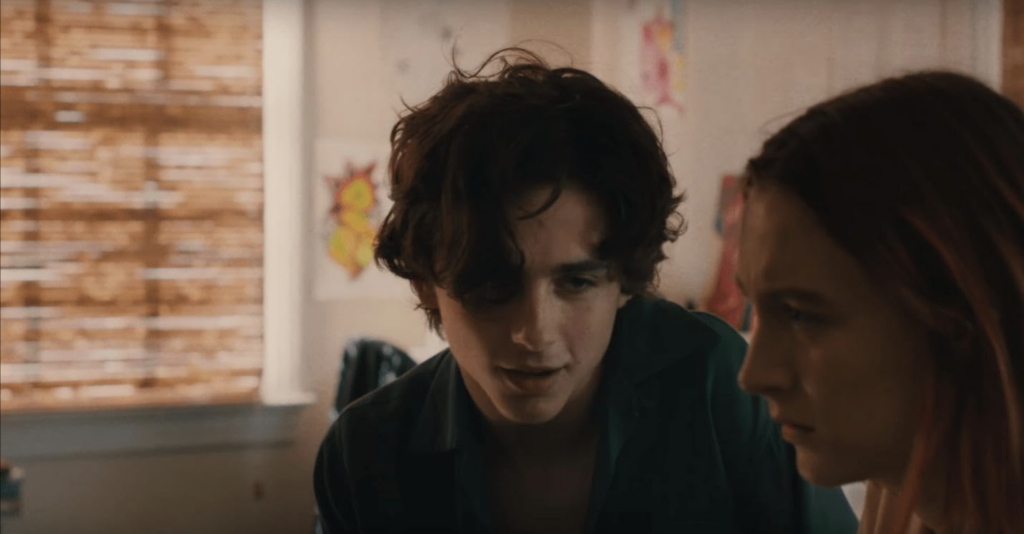
“I wish I could live through something.” What does this mean? Why is Christine restless? We get the sense this is just who she is. She’s groping in the dark for acceptance—from herself. Certainly her family loves her, as abrasive as they are. After Lady Bird loses her virginity to the hot, scummy Kyle (Timothée Chalamet), she cries in her mom’s arms. Marion doesn’t know why she’s upset, and Lady Bird is too hurt and embarrassed to say why. Marion takes her house shopping, which is implied to be a longstanding mother-daughter diversion. Larry finds purpose in helping Christine apply for colleges on the east coast, even though their budget can barely cover their current expenses. Even Miguel and his girlfriend Shelly compliment Christine’s thrift store prom dress. Home, the place Lady Bird so wants to leave behind, is love. When she realizes this, she does two small but critical things (spoilers coming): she starts introducing herself as Christine (rather than Lady Bird) and enters a church. They are small gestures, overshadowed by her closing monologue, a voicemail she leaves for her estranged mom. It’s a gorgeous speech about memory and identity, about connection and love.
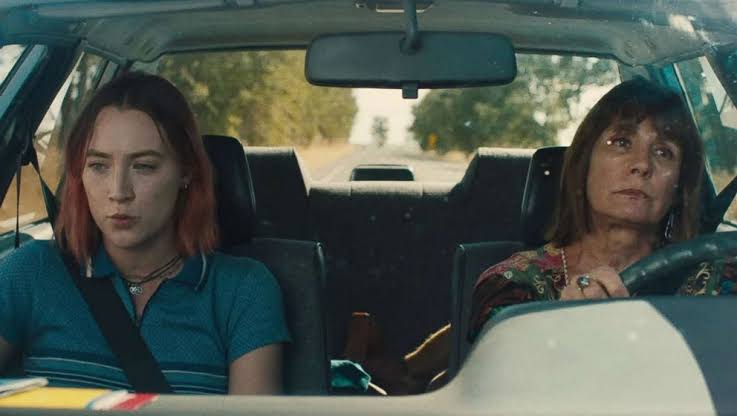
So how does Lady Bird fit neatly into films about Christ and the Christian? It doesn’t and that’s its beauty. This is one of the best films I’ve seen about family and coming of age. (My impression may be colored by the parallels between Christine and myself. Like her, I couldn’t wait to leave my hometown and attend college far away. Like her, I also rejected Christianity and “bourgeois values” before returning to them as a young adult.) The character of Christine/Lady Bird, realized so beautifully by Saoirse Ronan, is not easily categorized. Writer-director Greta Gerwig has brought all her filmmaking powers to bear on this character, one not based on her, so she says. Just as roundly and unpredictably drawn is mother Marion, a quietly seismic performance from Laurie Metcalf. The faculty of Immaculate Heart is made up of genuine priests and nuns—no hypocrites or philanderers here. Stern Sister Sarah Joan (Lois Smith) seems to understand why Christine vandalized her car. The dedicated theatre director Father Leviatch (Stephen McKinley Henderson) has an unexplained personal crisis. The fear of violence drove the McPhersons to send Christine to a school they could barely afford. And the rites of the church, the preaching of chapel, and the singing of hymns convicts Christine of the realization she is loved. Sure, a theologian might take issue with this weak take on Colossians 3:3. But just as the Christian’s life is secured and secreted away in Christ until the last day, so Christine’s joy is secure, even as it’s hidden from her own eyes and heart until it’s unlocked in God’s house. At that point, Christine has every worldy thing she wants—the college experience in Manhattan, freedom to drink and sleep around, and complete “independence” (paid for by mom and dad).
It’s still not enough. Is it ever?
