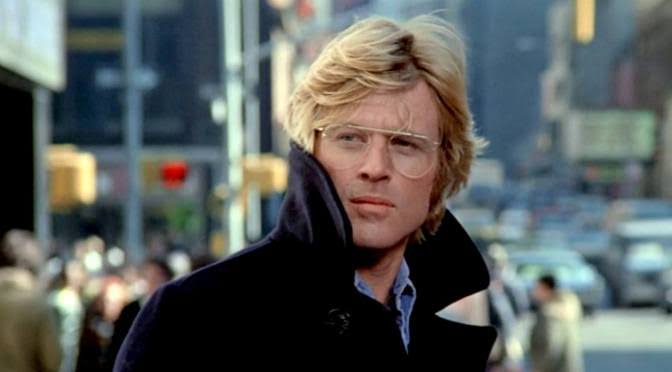
In the movie Out of Sight, George Clooney and Jennifer Lopez, locked in a car trunk, bond over Faye Dunaway movies: Bonnie and Clyde, Network, and Three Days of the Condor. Lopez’s Karen Sisco criticizes the last movie for getting Dunaway and Robert Redford together too quickly. It’s a meta-criticism of the scene she’s acting out, since like Redford’s Condor, Clooney’s Jack Foley has kidnapped Sisco. And like Redford and Dunaway, Clooney and Lopez will soon fall into bed together, circumstances notwithstanding.
That scene achieves two objectives: it lets the filmmakers off the hook, acknowledging a problem with movie romances (although not with Out of Sight, which crackles with chemistry). It also provides good cinema bona fides. Because everyone knows bank robbers and U.S. marshals love old movies. Hey, maybe they do! Who am I to judge? Three Days of the Condor carries a long cultural legacy, inspiring not only Steven Soderbergh and Scott Frank, but also superhacker Kevin Mitnick and Kevin Feige, who cast Robert Redford as the bad guy conspirator in The Winter Soldier. Condor became what he beheld, and so Three Days of the Condor secures its place in the pantheon of 1970s conspiracy thrillers.
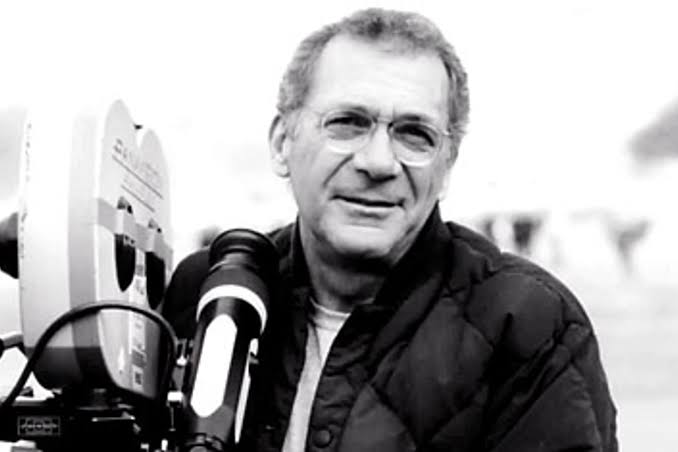
Condor was one of many classics Sydney Pollack directed and possibly the one with the greatest cultural footprint. Pollack directed movies with Harrison Ford, Paul Newman, Barbra Streisand, and Tom Cruise. He directed an Oscar-winning Best Picture and won an Oscar for directing. But a lot of those movies have faded into the cultural background. They’re still great films, but they don’t bear the same weight as True Grit, 12 Angry Men, or The Sound of Music. Some may even now be considered problematic, although my research doesn’t turn up the hate that, say, The Odyssey or The Blind Side engender.
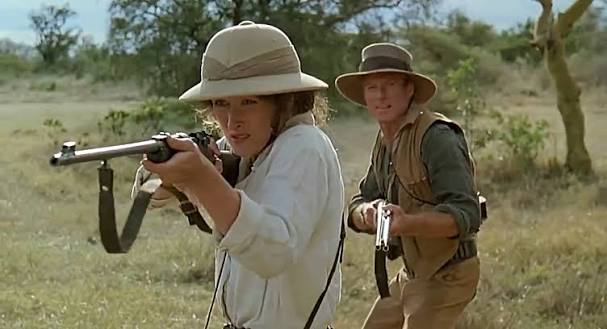
Let’s start with Out of Africa. Based on Karen Blixen’s book, the film craft is some of Pollack’s best. Every shot of David Watkin’s photography is a treat, especially the title sequence of astonishing long shots of a steam train that must have taken hours to set up and film. John Barry’s music soars like the Kenyan plains they depict. And of course, Meryl Streep is a delight as the befuddled, put-upon Karen. I’m not as sold on Redford as her romantic partner Denys. He seems more like the Sundance-packaged Redford than the adventuring outdoorsman he’s supposed to be. (For that, see Hugh Jackman’s nameless Drover in Australia.) Klaus Maria Brandauer has more fire as Karen’s rowdy husband. Is this a patronizing story of colonial paternalism? Sure. But it’s better, I say, for Karen to provide land to her Kenyan staff than leave them to the whims of the next landowner. For her to urge them to rise up in revolution would be false and anachronistic. Karen grows into a capable, independent thinker. At the end of the movie, she literally don’t need no man, and like My Brilliant Career’s Sybylla, Karen becomes a celebrated author.
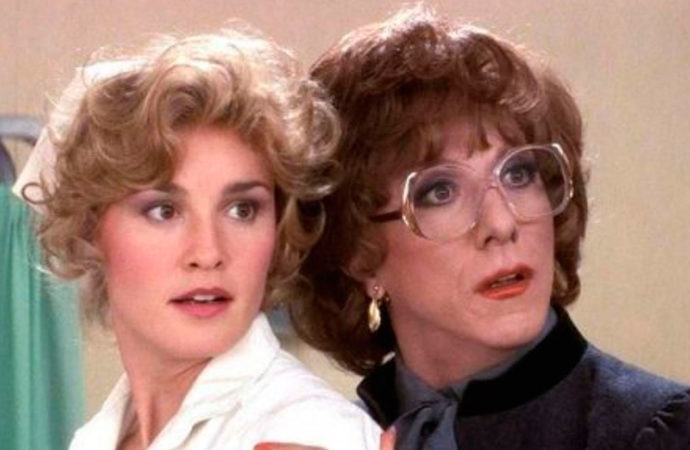
Tootsie is one of the absolute best comedies ever made. It’s hilarious and built on that staple of comedy, the deception that goes on too long. Think The Menaechmus Twins meets Twelfth Night meets Some Like It Hot. Dustin Hoffman is barely believable as a woman, and that’s the charm—that everyone is fooled. He buffaloes his way onto a soap opera by calling out their sexist desire for a hot young thing, ironically using a feminist talking point to steal a woman’s role. While acting on the soap, he falls for Jessica Lange, a fellow actress with whom he shares a dressing room. Because he can’t reveal himself (or his feelings) to her, they fall into a close friendship. And there is where the movie really shines. Unlike Three Days of the Condor, Tootsie is satisfied with this abiding platonic closeness, even if Hoffman’s Michael Dorsey wants more. In fact, Tootsie shows that friendship can be deeper than romantic love.
Dabney Coleman appears as the male chauvinist director because there was a law in the 70s and 80s that all sexist men had to be played by Dabney Coleman. The cast is rounded out by a hilarious Bill Murray, an even funnier Charles Durning, an early career Geena Davis, and Pollack himself as Michael’s agent. Teri Garr plays Michael’s student with whom he has a fling only to avoid admitting he was trying on her clothes. There must have also been a law mandating if there was a female character who got short shrift in a movie, she had to be played by Garr.
One movie that did receive some heat was Pollack’s last narrative feature, The Interpreter. You’re probably wondering why in a filmography that includes Jeremiah Johnson, The Way We Were, and The Firm I call out this mid-rent Saturday night thriller. I agree The Interpreter is not a hall-of-fame movie. The plot is overly byzantine and even though there are plenty of white Africans (Charlize Theron was probably their first choice for the role), it seems the only reason for Silvia Broome to be white was to avoid having to cast Angela Bassett or Alfre Woodard, neither of whom was the box office draw Nicole Kidman was in 2005. Kidman and Sean Penn are perfectly fine as the leads, and I really enjoyed Catherine Keener in her small but significant role as Penn’s Secret Service colleague. The reason I remember The Interpreter is for this scene, which is pure Hitchcock, right down to Sabotage’s bomb-on-bus scenario:
The Interpreter was rightly questioned for featuring an Africa-centered plot with Nicole Kidman at the center of it. It was also panned for being a somewhat dry thriller. I personally didn’t care for the ending, with war criminal Zuwanie confessing to the UN General Assembly. How many times has that happened? But what The Interpreter showed was a veteran director near the end of a storied and varied career. This was the same Sydney Pollack that made Americans afraid of their own government in Three Days of the Condor. That’s more than most directors ever accomplish.
