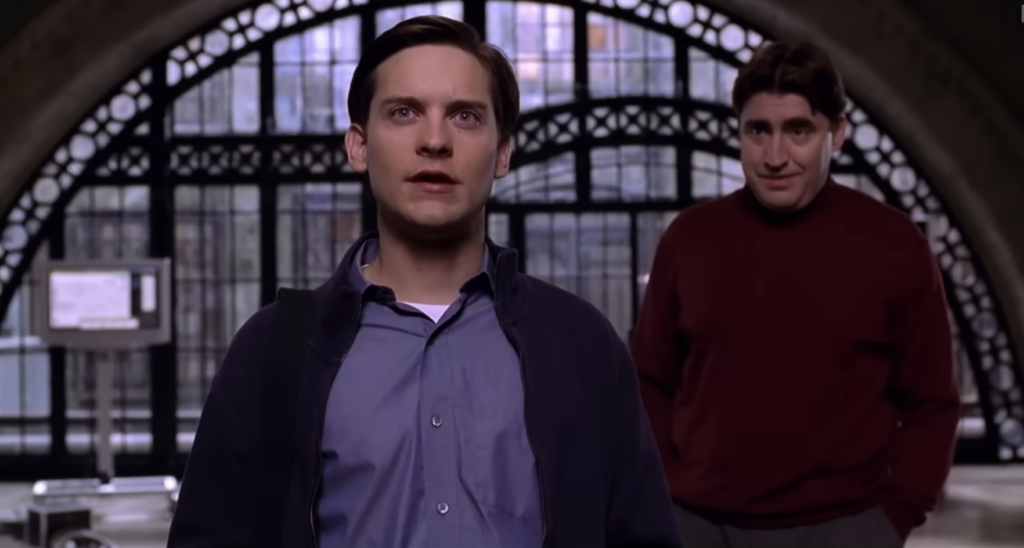
(This essay contains spoilers)
Spider-Man 2 is the best superhero film ever made. I’m willing to entertain other challengers, but if I were on Jeopardy! and the Movies for $800 answer was “The Best Superhero Film Ever Made,” I would blurt out “What is Spider-Man 2?” and feel good about it. You can fight me on this. And I’m not alone in this assessment.
What makes Spider-Man 2 so good? It has great action and peril, sure, and it has a fantastic villain in Alfred Molina as Doctor Octopus. But all the characters are equally deep in their conceptions and realizations because they’re all struggling with the same thing: vocation.
Vocation is the Christian doctrine of our purpose—of what we are called to do. We are all called to love and serve our neighbor, to love one another as Christ loves us (John 13:34). We are called to obey God’s commands, to walk humbly with Him, and do justice while practicing mercy (Micah 6:8).
But what does that mean in the here and now? What career should I pursue? Whom should I date? Should I propose marriage to this person or should I break it off? How many children should I have? Which car should I buy? These are the questions that occupy the Christian’s prayers—indeed, they take up a lot of real estate in all our minds and hearts. This is why Thomas Aquinas, Martin Luther, Tim Keller, and the Good Book itself have much to say on vocation, especially on our priorities.
Every character in Spider-Man 2 struggles with these things. Harry Osborne (James Franco) strives to match his father’s accomplishments, which is why he funds Otto Octavius’s experiment. When that fails, he has on his conscience the death of Otto’s wife, the loss of his position on Oscorp’s board, and indeed the loss of his very legacy.
Otto himself wrestles with vocation as well. At the film’s start, Molina plays him as a genial professor—brilliant, but tempered by the moderating influence of Rosie, his wife. Octavius assumes the role of mentor to the admiring Peter Parker with great enthusiasm. He sees in Peter ambition but also the soul of a hero.
And that role—the role of New York’s hero champion—is what Peter Parker wrestles with, which is how Spider-Man 2 ascends to something more satisfying than your bog-standard superhero movie. At the heart of this movie is Peter (Tobey Maguire) wishing he could shed the Spider-Man persona and the great responsibility that comes with it. In the opening scene, he’s just trying to hold down his job as a lowly pizza delivery man. But kids need saving, so Peter/Spidey is late with delivering his pizzas (to an amusing pre-Bones Emily Deschanel) and so loses his job.

The opening scene begins with a shot of Mary-Jane Watson (Kirsten Dunst), whom Peter wants more than his job or college career. He gets his chance when his powers suddenly disappear, freeing him up in his mind to pursue the girl he loves. What Christian hasn’t prayed for a sign like this? Even Jesus himself begged God the Father to let the cup of agony pass from him. If the Christ, the Messiah, entertained the possibility of forgoing crucifixion to save the world—if even our Lord dreaded this course, who could blame Peter Parker for celebrating when it seemed like his cup was also passing from him? Alas, it is not to be. Otto’s and Harry’s failures compound, and each of them blames Spider-Man. So they begin a coordinated reign of terror, forcing the reluctant and uncertain Peter Parker to don the spidey suit and plunge back into his calling.
So wait, you ask, how is any of this Christian? The Jew, Muslim, Hindu, and non-believer can all seek clarity on their path with equal vigor and thoughtfulness. True, and perhaps a non-Christian reader can share how he or she thinks of vocation. For this article, I would point to the two pivotal women in Peter’s life: Aunt May (Rosemary Harris) and Mary Jane Watson. We know May Parker is a Christian; we saw her pray the Lord’s Prayer in the first movie. With a knowing wink, she gently prods Peter back to his true calling by appealing to his kind nature. The city needs heroes, she says, people to demonstrate selfless sacrifice in the service of others.
(This motivational moment follows one of the best scenes in the film. Peter confesses to Aunt May that his selfishness led to Ben Parker’s death. May rips her hand from Peter’s grasp. The saintly woman is human after all, and she takes the hurt and loss she feels out on Peter.)
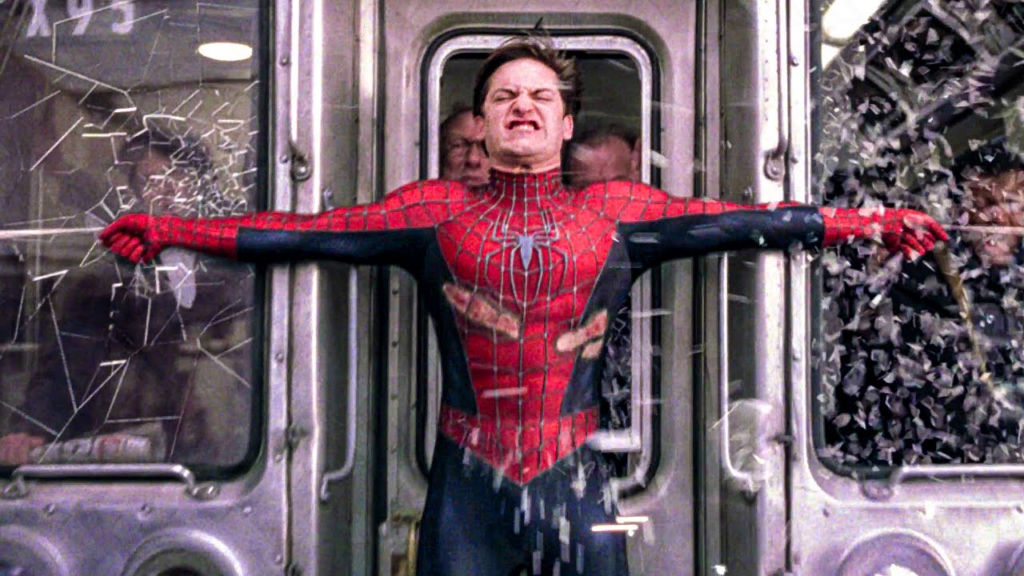
And Peter/Spider-Man does selflessly sacrifice himself. In a thrilling set piece, he is actually crucified to save the people on the elevated train. And the people he saves, witness to his immense sacrifice, serve him back by agreeing to keep his identity secret.
Otto/Doc Ock, it should be noted, has been driven mad not only by his failure and the death of his wife, but also through the influence of his mechanical arms. Early on, he explains the arms each have independent AIs linked to his own nervous system. A special chip restrains these AIs so they don’t overwhelm his mind, but in the accident that fuses the arms to his body the chip is destroyed. Otto Octavius loses his free will because of his scientific hubris—his sin. He regains it when Peter Parker reminds him of something Octavius told him: that to do right, we sometimes must give up our dreams.
The Calvinist no doubt bristles at this Enlightenment claptrap. But I would point to Philippians Chapter 2, verses 12-17 (emphasis mine):
12 Therefore, my beloved, as you have always obeyed, so now, not only as in my presence but much more in my absence, work out your own salvation with fear and trembling, 13 for it is God who works in you, both to will and to work for his good pleasure.
14 Do all things without grumbling or disputing, 15 that you may be blameless and innocent, children of God without blemish in the midst of a crooked and twisted generation, among whom you shine as lights in the world, 16 holding fast to the word of life, so that in the day of Christ I may be proud that I did not run in vain or labor in vain. 17 Even if I am to be poured out as a drink offering upon the sacrificial offering of your faith, I am glad and rejoice with you all.
Now it is Peter who must mentor Doc Ock, and so he does. Peter Parker has been tried and tested in giving up himself for others. Now Otto Octavius, freed from the demons of self and failure, can sacrifice himself to save the city.
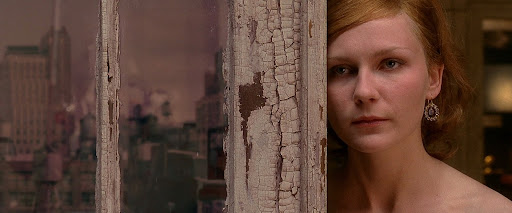
One other character performs a major act of self-sacrifice—Mary Jane Watson. Having learned her friend Peter Parker is Spider-Man, she leaves the wedding altar and appears in Peter’s apartment to announce her choice—to be with him. This is a brilliant moment, with Mary Jane playing the hero. Can she, like Peter and Otto, deny herself to fulfill her calling? She gets her test almost immediately, when sirens sound and she tells Peter, “Go get ‘em, Tiger.” Peter dons his spidey suit and jumps into action, whooping with joy. But the movie ends on Mary Jane in her wedding gown, not cheering Peter on, but bearing a sad, wistful look on her face. (Thus Spider-Man 2 both begins and ends with Mary Jane.) This will be hard for her—maybe she has doubts. This honest decision by director Sam Raimi, Dunst, and the other filmmakers adds depth to Mary Jane’s character. No longer the damsel in distress, she’s forging her own destiny and carrying the weight of it.
Superheroes are our modern-day Mighty Men, our Judges who bring righteousness to a disordered world. In Spider-Man 2 and the previous year’s X-Men 2, the filmmakers chose to bring God and His will into the world of heroes. These movies were not made by professing Christians. But still, they profess Christ. That’s what He called them to do.
