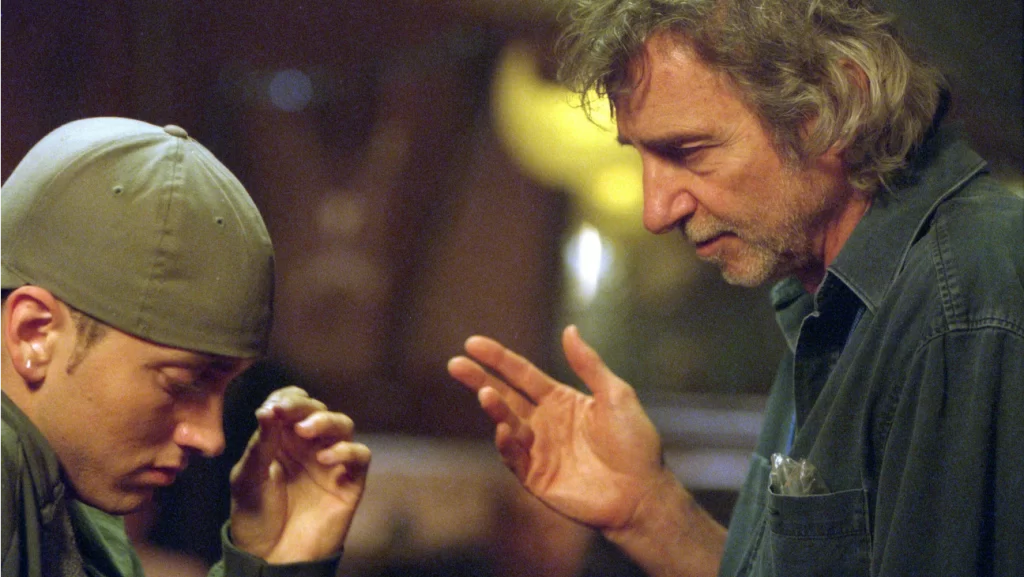
What makes a great director? Is it someone with a singular aesthetic vision, like Ridley Scott’s early emphasis on backlighting or, to hit the other end of the spectrum, Yasijuro Ozu’s static camera placement? In my intro to this series, I wanted to explore directors who make great films but have no singular vision, aesthetic, thematic, or otherwise. These are directors who work for hire. But like all great craftsmen, they attack their work with everything they have.
Look at the movies Curtis Hanson has realized: Never Cry Wolf, 8 Mile, Wonder Boys, Bad Influence, and the all-time great L.A. Confidential. What theme runs through these movies, if any at all? You could say the aforementioned all tackle themes of masculinity and the struggle to control the monster, directing it to productive ends. If that’s the case, three of Hanson’s oeuvre explore themes of femininity and the struggles women face to relate to family and each other.
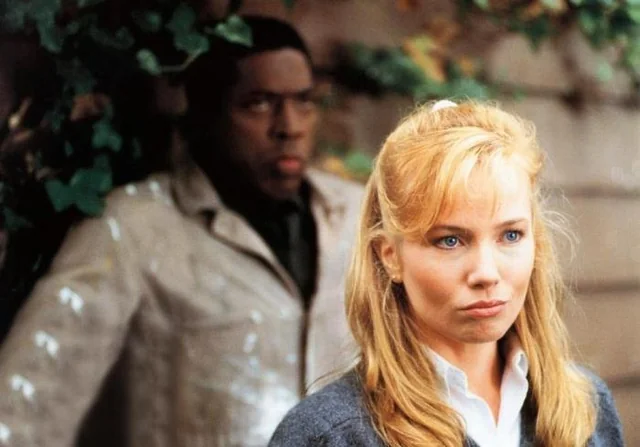
The Hand That Rocks the Cradle dives right in to a setup that could only have come from a woman writer: Claire (Anabella Sciorra) is sexually assaulted by her OB-GYN. When she reports it, the doctor commits suicide. His widow (Rebecca DeMornay) miscarries, and insinuates herself into Claire’s life as a nanny to her new baby. Here DeMornay’s plot is revealed: not the death of Claire and her husband, but the taking of her two children, ostensibly to replace her own lost child.
Amanda Silver’s script is pure page-turner—in the hands of a less attentive filmmaking team, we might have gotten a forgettable B-movie or TV movie-of-the week. Instead, Curtis Hanson’s direction and Robert Elswit’s photography elevate the material. Two shots stand out to me: the first is the final dispatch of DeMornay’s villain, where she’s pushed out a window to her death, falling from one roof line to another. Elswit places each directional change at the extreme left and right of the film frame so DeMornay (her stunt double, really) appears to be bouncing off the edge of the film frame. It’s as if the film is helping to kill our antagonist! The second notable shot occurs after DeMornay kills a key character. Elswit shoots her in profile, the lighting sharply calling her cheekbones into relief. As DeMornay coldly eats an apple and chews, she appears ape-like, animalistic. To me, the lighting of faces is the highest calling of the cinematographer. Elswit’s shot here carries a lot of weight.
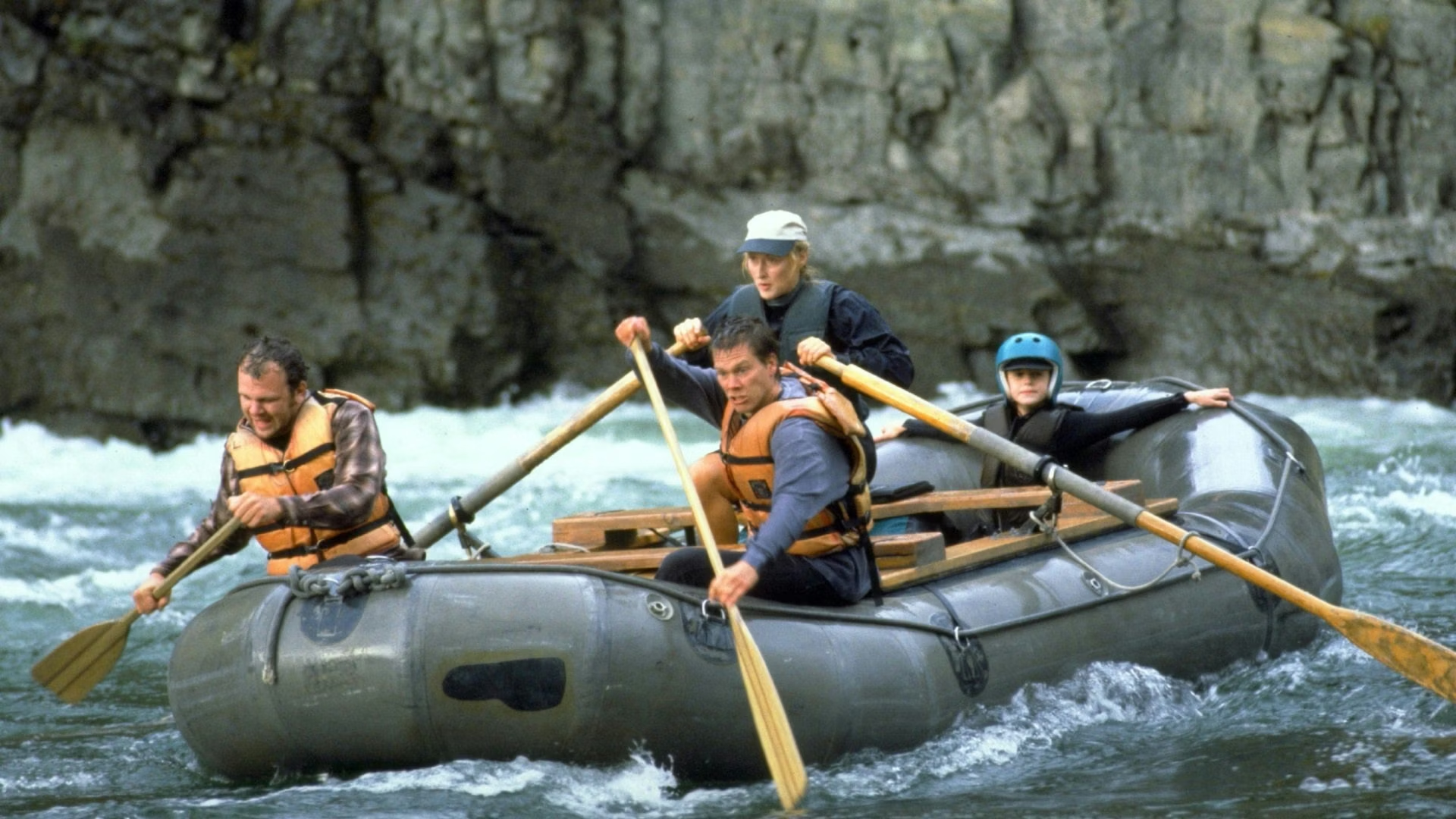
The River Wild is a silly B-movie, if you can call any movie starring Meryl Streep a B-movie. The script, let’s be honest, is terrible. Streep’s character announces her marital issues by telling her mother, “My marriage is over!” The plot is also silly. Streep is an expert whitewater rafting guide who’s taking her family through Class 5 rapids. Kevin Bacon and John C. Reilly are bank robbers who have chosen this very river as their getaway route. If you committed a robbery, no doubt miles away in the nearest town, why would you drive all the way out to a treacherous river? Where do they intend to end up? And why does Streep’s Gail pull that stunt with the revolver at the end, pretending to land on an empty chamber just to trick Bacon’s bad guy? Why, it’s so Hanson and Elswit can get the studio-mandated hero shot, pulling focus from Streep’s determined face to the muzzle of the gun before she blows Bacon away.
It’s a dumb movie in many ways, but I still had a great time in the cinema. Hanson pulled off what today would be drone shots hurtling down the Salmon River. In 1994, I’m guessing they rigged cranes or Skycam-type apparatuses over the river to get the same swooping effect. I also appreciated Streep stepping into the role of action hero. In lesser hands, the Gail character is easily swapped out for a man. In The River Wild, Streep and Hanson emphasize her protective instincts. Gail is a master on the river, but first and foremost she’s a mama bear to her deaf son (ASL plays a key role in the film). Here is the connection to The Hand That Rocks the Cradle, although that first film dares to plunge deeper into the unique challenges that bedevil the American woman—sexual assault, fertility, questions of purpose, rivalry with other women, and even the need to be seen as a “good person,” especially in lefty Seattle. As mentioned, The River Wild’s Gail is interchangeable with any other brawny actor or actress, but Streep gets the job done with aplomb.
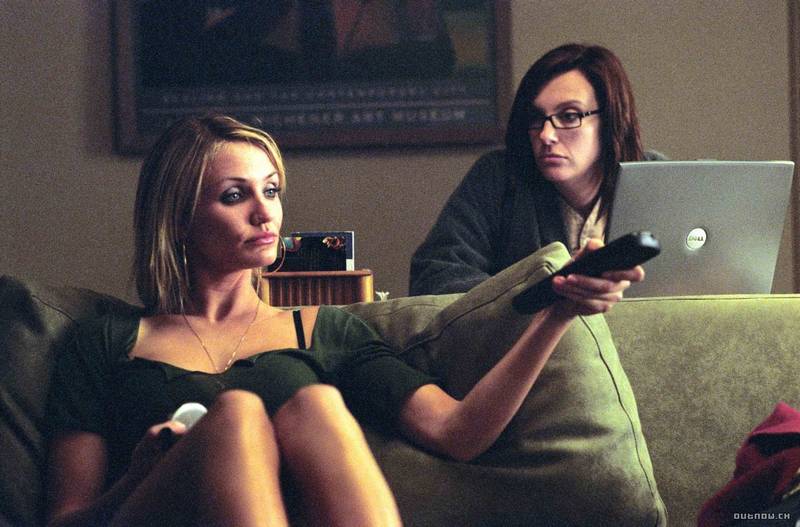
The most successful of Hanson’s “woman” movies has to be In Her Shoes, based on Jennifer Weiner’s novel. The story revolves around three women: successful lawyer Rose, her struggling sister Maggie, and their estranged grandmother Ella. The intricate plot covers a lot of ground, treating Maggie’s dumpster fire of a failure with great compassion but also realism. Played by Cameron Diaz, an early scene depicts a sexual encounter in a bathroom stall. The drunk Maggie vomits, and the man jumps back with revulsion. Even with a face and body like Diaz’s, attraction has its limits. Maggie’s failures in life stem not only from growing up without a mother, but also an undiagnosed dyslexia. She worms her way into Ella’s assisted living community, but ends up helping a blind professor, who tutors her in reading. Her slowly developing confidence and newfound love of poetry help Maggie find her center and repair her relationships with Rose and Ella.
The great Shirley MacLaine plays Ella, and the hard-charging Rose is portrayed by Toni Collette, a masterful chameleon of an actress. Collette’s breakthrough role was the pudgy, goofy title character in Muriel’s Wedding. Here, she’s lean and serious. You can feel the weight of a life caring for her sister and her widowed father. Also the yearning for her own life and love. The words “biological clock” are never spoken, thankfully, but they lurk in the background. In frustration, Rose quits the law firm, which opens the door for a romance with a kind former colleague. Simon is every woman’s ideal—curious, a good listener, and encouraging, especially when it comes to relationships. With Simon’s support, Rose finds the strength to mend the bonds with her sister, father, and grandmother, and confront the pain of losing her and Maggie’s mother during childhood.
The term “chick flick” is often used to denounce movies about women and relationships, no doubt because so many of them are not very good. Some are pandering, ending with an undeserved “female empowerment” moment. Others resolve without any work on the characters’ parts. In this, the “chick flick” genre is no different than any other, when you think about it. For every Die Hard and Terminator 2, there are five Steven Seagal movies. For every Stagecoach, there are dozens of TV Westerns filmed on the same backlot. If all “chick flicks” were like this movie and Dear Frankie, maybe there would be no sneering at movies about women and relationships. It’s probably wishful thinking, and I certainly have done my share of sneering. Two of my favorite thrillers are Aliens and Silence of the Lambs, both led by women heroes and both covering enough feminist themes to fill a semester of Women’s Studies classes.
Alas, maybe those are not considered “chick flicks” because they don’t narrate the struggle to relate to others. While men are just as relationship-hungry as women, we don’t like to talk about it, certainly not make films about it. The exception is Curtis Hanson, whose oeuvre is mostly about men and their struggles against corruption, nature, and other rappers, but made three accomplished movies about women and their struggles.
